|
New York News Publishers Association |
|||

Sunshine Week 2026 - March 15-21
 Sunshine Week is a national initiative to promote dialogue about the importance of open government and freedom of information.Participants include news media, civic groups, libraries, nonprofits, schools and all others interested in the public’s right to know. Sunshine Week seeks to enlighten and empower people to play an active role in their government at all levels, and to give them access to information that makes their lives better and their communities stronger.
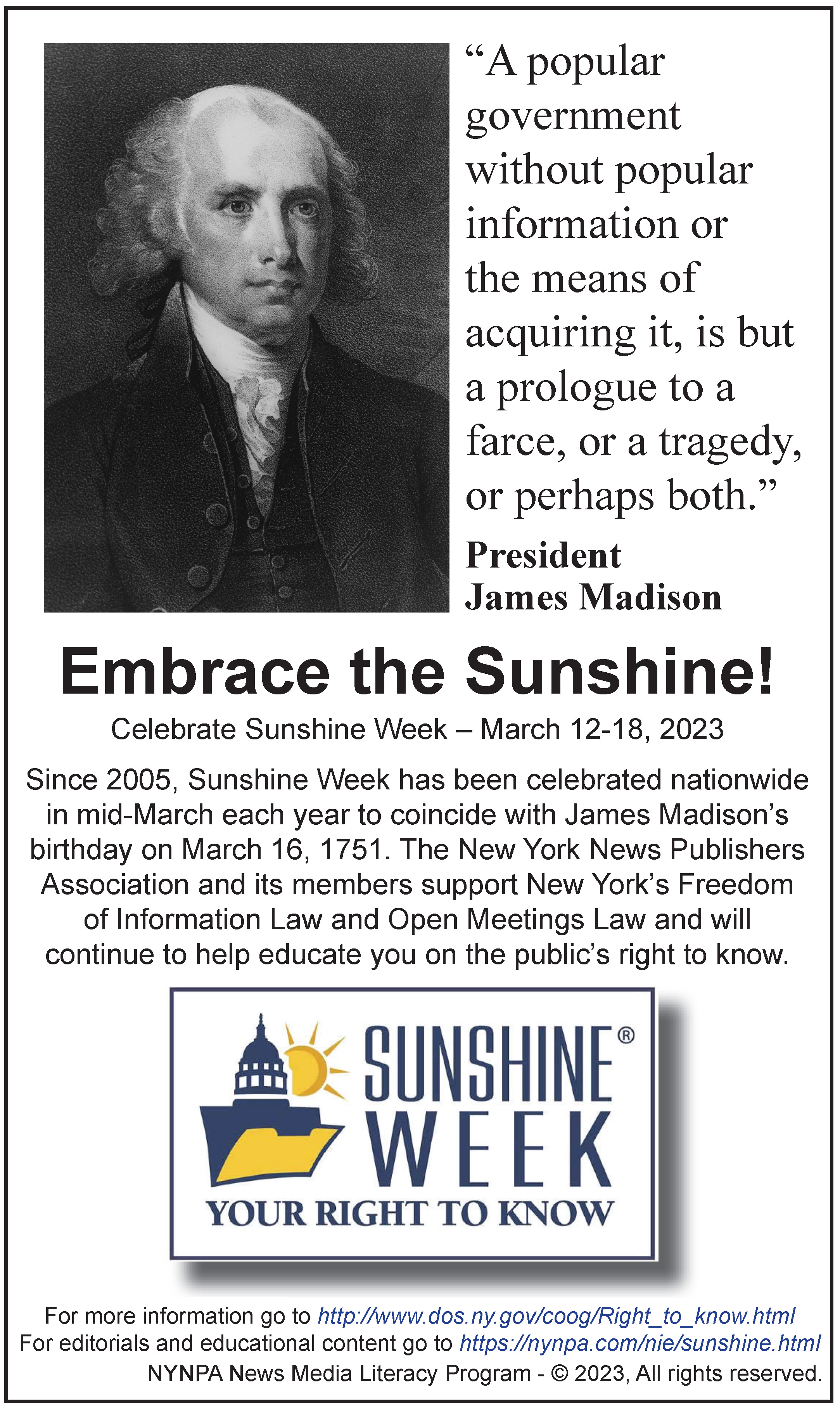
Click here to access a 10-part series of public service announcements in PDF format (2 columns x 6 inches) that can be used to promote Sunshine Week. A sample of one is pictured to the right. (Free for NYNPA member publications to share in print or online - all others contact Mary Miller at mmiller@nynpa.com for affordable copyright pricing).
Click here to access a teaching guide including graphic organizers highlighting Freedom of Information & Sunshine Week.
Click on the image below to view a short video providing a basic summary of New York state's Freedom of Information Law (FOIL).
Click on the next image to view a short video that highlights New York State's Open Meetings Law.
As editorials and editorial cartoons become available, the content will be posted below. This content is available for all NYNPA member publications to reprint with attribution to increase public awareness of Sunshine Week and the public's right to know. All contributors should sent editorial text or cartoon images to Mary Miller at mmiller@nynpa.com.
Mark C. Mahoney, Opinions Editor, Gazette News Group, Inc.
|
Groups and lawmakers push to strengthen state’s transparency lawsWhen it comes to government transparency, we tend to place much of the blame for secrecy on the public officials who deny us access to public records or who meet behind closed doors so the public can’t know what they’re doing. But two major obstacles to the public’s right to know are the state laws that are designed to protect that right. To demonstrate how government officials at all levels regularly flout the law, the New York Coalition for Open Government noted that only 31% of state agencies provided FOIL data in their 2022 Transparency Plans; most state agencies take more than the 20 days required by FOIL to provide requested records; 72% of towns do not post meeting documents online; 35% of villages did not even post a meeting agenda; 39% of counties failed to acknowledge FOIL requests within the required five business days; 73% of election boards failed to acknowledge requests within five business days and 28% of counties never acknowledged FOIL requests at all. And there’s not much the citizens can do about it. We say it often: The fight for open government is never-ending. But the citizens aren’t in this fight alone. And one of the biggest fights they regularly engage in is adding substance and strength to the state’s inadequate transparency laws. PROPOSED LEGISLATION If you read our Opinion pages regularly, you’re likely familiar with some of these proposals already, as some have been proposed in the past. One bill (A2321/S452), would require all agencies to submit to the state a log of all FOIL requests received or pending. Another (A950A/S1418) would authorize the award of reasonable attorneys’ fees in FOIL proceedings if the person is successful, and in open meeting proceedings. A third (A1410/S5000) would limit the commercial FOIL exemption by requiring entities excepted from disclosure under FOIL to periodically reapply for the exception. A fourth (A3425/S2520) would require agencies to acknowledge FOIL requests and produce an approximate date, within a reasonable time frame for the request to be approved or denied by. The first three bills passed either the Senate or Assembly last year, but not both as is required. The last bill passed both houses, but Gov. Kathy Hochul vetoed it. Lawmakers are also considering other legislation, including a proposed amendment to the state constitution, the Right to Public Information (A834/S2512), which would enshrine in the constitution the public’s right to access government records and attend public meetings. Another bill (A7552) would help citizens gain access to records by requiring that local officials receive mandatory open government training. And another bill (A3615/S1027) relates to government meetings, making hybrid meeting rules passed during the pandemic permanent and mandatory, and ensuring remote access for residents who can’t attend in person. TRANSPARENCY ADVOCATES Among the advocacy groups working to make New York government more transparent this week were: Reinvent Albany, the New York Coalition for Open Government, Amnesty International USA, BetaNYC, Common Cause/NY, Earthjustice, the Freedom of the Press Foundation, the Legal Aid Society, the Media and Democracy Project, the National Press Club Journalism Institute, the New York Civil Liberties Union (NYCLU), the New York Public Interest Research Group (NYPIRG), the Radio Television Digital News Association and the Surveillance Technology Oversight Project (STOP). These are the people fighting for your right to know, and this is the legislation they’re fighting for. While Sunshine Week ends today, the fight for open government goes on. |

|
Transparency advocates push for NY reforms amid Sunshine WeekWhen it comes to compliance and enforcement of open meetings and freedom of information laws, New York State still has a lot of work to do. That was the Sunshine Week conclusion of government transparency advocates who met with state lawmakers in Albany on Wednesday to press for the passage of reform bills they say will strengthen New York’s open government laws. “We have the laws on the books. We just don’t enforce them. Why is the burden of enforcing transparency laws placed entirely on the residents of New York?” said Axel Ebermann, director for the non-profit, non-partisan group, the New York Coalition For Open Government. This week is Sunshine Week, a period recognized by journalists, civic groups, educators and lawmakers in an effort to highlight the importance of public records and open government. It is based at the Joseph L. Brechner Freedom of Information Project at the University of Florida’s College of Journalism and Communications. To prove their point, they shared the findings from coalition research, which showed:
Coalition members continue to advocate for the passage of four transparency bills, including:
Coalition members joined on Wednesday in Albany with six legislative sponsors of broader open government laws as well as representatives from other good government groups, including Reinvent Albany, the NYCLU, Common Cause/NY and the Freedom of the Press Foundation. The coalition’s push comes after a session in which several transparency bills gained significant legislative momentum. Last year, the bill to reduce agency FOIL response times passed both the Senate and the Assembly – only to be vetoed by Gov. Kathy Hochul. Other FOIL reform bills passed one chamber but stalled in the other. The coalition says those near-misses show the legislature is ready to act, and that the remaining obstacle is political will at the executive level. “We come to Albany every year with our partners. We research problems, write bills, and work to pass them. Some of them actually move forward thanks to our legislators. And then — they often get vetoed by the governor. That is immensely frustrating,” Ebermann said. |

Mark C. Mahoney, Opinions Editor, Gazette News Group, Inc.
|
Don’t be left in the dark at public meetingsNo local government body in New York is run by a single person. So to get things done, people have to gather together and meet. And you, as a citizen, have a right to know when they’re meeting, what they’re going to talk about, to observe their discussions (with limited exceptions), to know the outcome of votes and to know how your public officials voted. That’s why New York has the Open Meetings Law, which deals exclusively with the rules regarding how public officials may conduct their meetings. The law covers all aspects of government meetings — notification requirements for meetings, agendas, means of access (in-person meetings and remote broadcasts), access to documents discussed during meetings, discussions and votes, and access to the minutes of meetings afterward. As with the Freedom of Information Law, the state Committee on Open Government website provides residents with the law, a summary of it and advisory opinions. MEETING NOTIFICATIONS Meetings must be held in a space large enough to accommodate the expected audience and officials must ensure that attendees can hear the proceedings. EXECUTIVE SESSIONS The law provides eight specific situations in which public bodies may meeting in executive session. They are:
That’s it. Eight. Be aware that public bodies will often try to circumvent the law by exploiting the public’s limited knowledge of the exemptions. Many boards will cite “personnel” as a reason to meet in executive sessions. But note the language of the law. It’s very specific about what so-called personnel matters they may discuss. Don’t be fooled. The word “personnel” doesn’t even appear in the law. Boards also will go into executive session to discuss “potential litigation.” That’s not in the law either. The law allows discussion of “proposed, pending or current litigation,” not the far broader possibility that someone might file litigation. Boards must vote during the public meeting to go into executive session, and they must state the “general area or areas of the subject or subjects to be considered.” If they don’t give a reason or are too vague, don’t be afraid to ask for clarification. SPEAKING AT MEETINGS This is one of the flaws in the Open Meetings Law, as public meetings are often the only time citizens have direct access to their representatives. If people can’t ask questions and make comments, it deprives them of the chance to influence decisions that affect them. Fortunately, most government bodies choose to set aside time during their meetings for public comment. But in order to ensure that as many people who want to speak at meetings have the opportunity, individual comments are often limited to only 3 to 5 minutes. So if you have more to say, either speak to your representative after the meeting or call or email them. The Open Meetings Law ensures your right to observe your government officials in action. Don’t let those officials operate in the dark by skirting the parts of the law they don’t like. |

Mark C. Mahoney, Opinions Editor, Gazette News Group, Inc.
|
Requesting government records requires diligence, persistence, patienceOne would think that obtaining public records from the government would be a linear transaction — the citizen files a formal request for the record and the government turns it over in a timely manner. That’s what’s supposed to happen. And in routine matters, it does. But the reality is that in many cases regarding the state Freedom of Information Law (FOIL), what should be a simple transaction of “ask and receive” can sometimes turn into a prolonged, frustrating and potentially fruitless negotiation. LEARN YOUR RIGHTS The state Committee on Open Government maintains a very citizen-friendly website that includes a summary of the state’s transparency laws in plain language. The summary includes a list of what records governments must release and what records it’s entitled to withhold. The website also includes a searchable, alphabetical list of “advisory opinions” based on key words that will help searchers learn more about how the courts have treated similar requests. The Committee also posts a very helpful publication called ‘Your Right To Know’ (listed under the Freedom of Information Law tab under Publications) that provides a lot of information in a very digestible format. FILING A FOIL REQUEST In most municipalities and school districts, the person with the title of “clerk” is the records officer. It might be easier and faster to contact the clerk for information. First, find out from the clerk whether the government entity actually maintains the record you’re seeking. Some clerks will honor a request for information if you simply ask them. So ask before filing any official form. Once you’ve determined who holds the record and learn that it’s not available by phone or online, it’s time to file a FOIL request. The process for asking for a record is quite simple. And you don’t have to be a lawyer to prepare and submit one. These days, many government entities and districts have an online form posted on their websites. You fill in your contact information and specify the records you’re seeking, and hit Send. Keep track of when you sent it so you can ensure the government body is following the deadlines. If there’s no online form or if you don’t want to use it, the Committee on Open Government website includes a template for FOIL requests that residents can simply cut and paste into an email and fill in with information about the specific record they’re seeking. POTENTIAL OBSTACLES But one of the common reasons for denial or delay is that the requester wasn’t specific about what records they were seeking or didn’t narrow the scope of the search. When seeking records, be as specific as you can about what you’re asking for. If you want the compensation for your municipality’s employees, make sure you define “compensation.” Don’t ask just for salaries if you really want both salaries and benefits. Also very important: Include a timeframe for your search. If you just want the past year or five years of records, make sure you say that. Otherwise, your request could be rejected for being too vague, too broad or too voluminous to fill quickly. Another tip: Do your best to find out if the record you’re seeking is even a public record. A local resident recently tried fruitlessly to gain a record from a state agency about a private contractor doing business with the agency. Multiple FOIL requests were rejected on the grounds that the information sought was privately held and was not subject to the Freedom of Information Law. Oftentimes in those cases, there’s a gray area, so don’t automatically take no as an answer. Research the circumstances under which private records are publicly available, either reading the law or the advisory opinions. The easier it is for clerks to retrieve a record, the more likely you’ll be to get the record you want and the faster it’s likely to be released. If your request is rejected, there’s an appeal process, which requires boards to respond with a reason within a specific period of time. If the board needs more time to fill a request, it must provide a projected date when it expects to be able to fill the request. In cases where a disagreement can’t be resolved, you may have to take your government body to court. (That’s a discussion for another day.) Seeking public records isn’t complicated. But it can be challenging. Learning about the Freedom of Information Law and taking the time to do your diligence will save you time and aggravation, and it will increase the chances of having your request filled in a reasonable amount of time. |
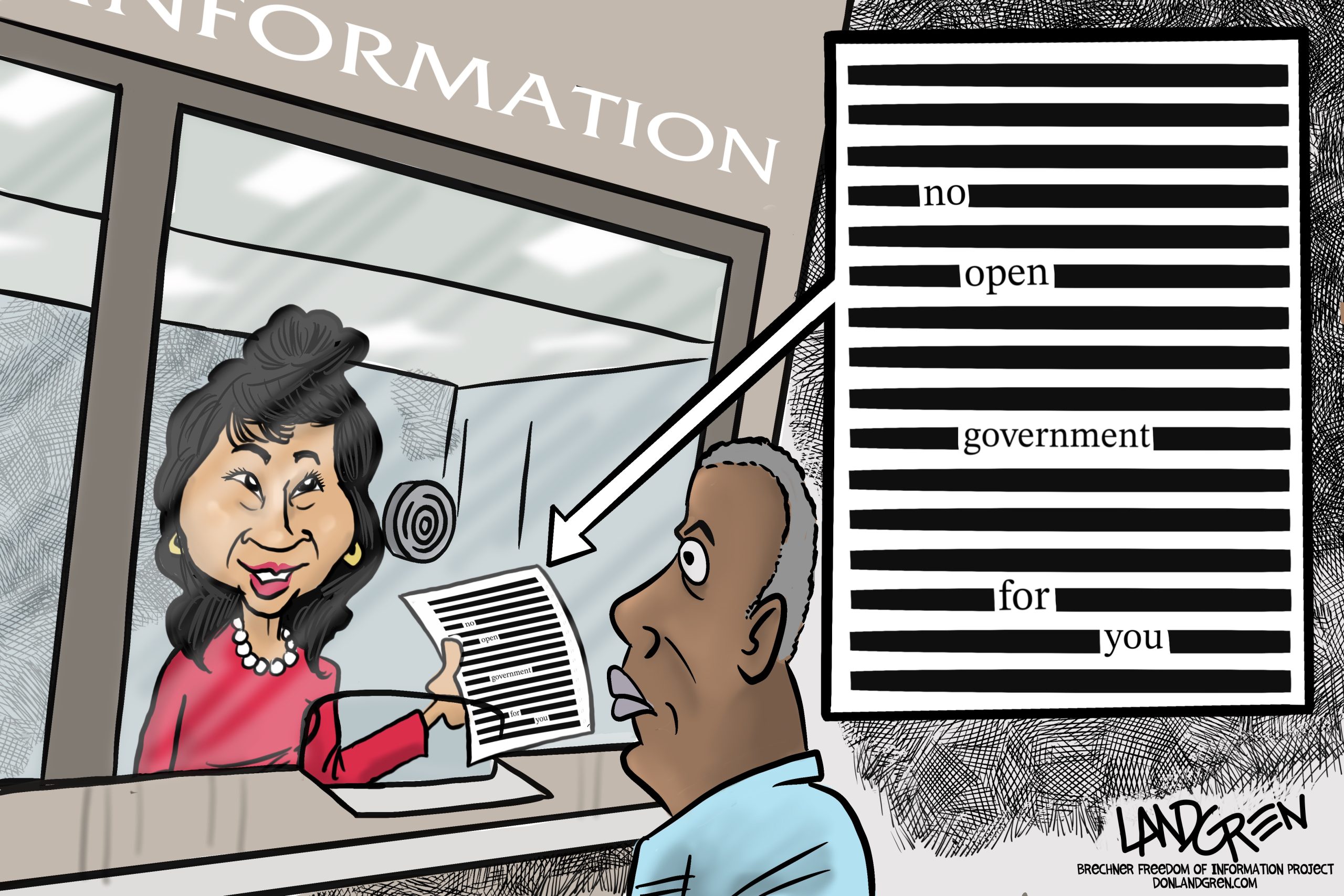
Mark C. Mahoney, Opinions Editor, Gazette News Group, Inc. To read the full length version of this editorial visit their website at www.dailygazette.com
|
It’s your government. It’s your right to know what it’s up to“I know of no safe depository of the ultimate powers of the society but the people themselves; and if we think them not enlightened enough to exercise their control with a wholesome discretion, the remedy is not to take it from them but to inform their discretion." To some government officials, transparency is inefficient, inconvenient and intrusive. It exposes their flaws, their failures, their fears, their secrets and their schemes, their omissions and their crimes. That’s why government officials often try so hard to withhold or hide information from a vested public and a prying press. And it’s why each year at this time, during “Sunshine Week,” journalists, citizen rights advocates, government watchdog groups and other dedicated individuals commit themselves to reminding people of their right to know, offer guidance in securing it, and encourage citizens to fight to preserve that right. The fight for your right to know isn’t just a philosophical exercise. In real, practical, everyday matters, government and the citizens are at odds over disclosure of information that directly affects all of our lives. KEEPING US IN THE DARK Throughout the state every year, government officials are withholding public documents such as budget information; draft reports and contracts; meeting in closed-door executive sessions on matters that are required by law to be discussed in public; using phone calls, emails and texts to conduct public business outside the earshot of the citizens; withholding information about police discipline and delaying or denying the release of body camera footage in public incidents; failing to post items of public interest on meeting agendas; failing to disclose unethical conflicts of interest; failing to notify the public of meetings with enough time to allow them to attend; and holding meetings in venues too small to accommodate citizens. And every time they choose to ignore transparency, the people lose a little bit of the power they’re entitled to have over their government. If the citizens are unaware of their rights or are unwilling to exercise them, government officials will continue to exploit them — to the detriment of a free and open democracy. THE BATTLE FOR ACCESS New York’s Freedom of Information Law (FOIL) and Open Meetings Law (OML) are notoriously flawed, both in terms of protecting the public’s right to know and enforcing it. Last month, a coalition of 10 good government groups advocated for a package of bills to reverse that. It includes legislation requiring all agencies to report their FOIL activity; require entities that submit records to state agencies that are excepted from disclosure under FOIL to periodically reapply for the exception; make it easier for citizens to recover FOIL attorneys fees; reduce agency response times to FOIL requests; and require agencies to allow for electronic appeals of request denials. On top of that, nearly 40 organizations are pushing to ensure that provisions established during the pandemic to expand public access to government meetings through video conferencing and hybrid meetings remain in place. The federal government also has a transparency law, the Freedom of Information Act (FOIA), that covers access to federal meetings and documents. That process, like the state process, is plagued by delays in the release of information and restrictions on public access to documents and meetings. Our focus here has been on state transparency laws because they most directly affect citizens in New York and because citizens have the best opportunity to advocate for enforcement and expansion of transparency laws through their representatives in state government. We hope during Sunshine Week to not only educate you about your rights, but inspire you to push the clouds of secret government away and let the sunshine in. |
Niagara Gazette Editorial Board
|
Celebrating public input during Sunshine WeekOn the surface, it might sound like a small thing. From our view, whenever a group of residents, voters and taxpayers push their government to not only listen to their concerns but also address them, we think it is always an important thing. That's exactly what happened back in January when seven residents attending a meeting in the City of Lockport in Niagara County stood in solidarity behind their elected officials to prove a point about appropriate accommodations for public meeting space. Those residents took their stand during a Lockport Common Council work session after Mayor John Lombardi III made the decision to move the meeting to a small and cramped back room inside city hall. Lombardi also opposed a council suggestion that the city government's meetings, work sessions included, be held in council chambers where there was more room for the public to comfortably attend. “We get more work done back here," a defiant Lombardi told a city alderman. "There’s certain things we hash out back here that the public doesn’t need to hear. If it’s up to me, it will stay right here.” Well, in the end, it wasn't up to the mayor because the residents, with help from a statewide good government and transparency advocacy group, eventually convinced him to reverse course. Williamsville attorney Paul Wolf, president emeritus of the New York Coalition for Open Government, said the small meeting room violated the state’s Open Meetings Law. He also noted it is not conducive to the needs of individuals with disabilities. “To force members of the public to stand around a conference table where members of the city council can sit and members of the public cannot, is not an appropriate space for a meeting,” Wolf said. “The fact that some city council members think this setup is OK is shocking. If other meeting spaces are available with more room and seating available, they should be used.” We're happy to report Lombardi has since relented, allowing all public meetings in Lockport to be held in council chambers where there's more space for members of the public to attend. We think the entire situation is a good one to highlight as New York state heads into Sunshine Week. Starting Monday, across New York, residents, journalists, media outlets and good government advocates like Wolf's coalition will be celebrating the importance of open government, freedom of information and emphasizing how sunlight is often the best disinfectant for democratic accountability. It is the perfect time to celebrate the work of the New York Coalition for Open Government, a non-partisan, non-profit group whose members are united by a passion for open government and protecting the public's right to know about the inner workings of its government. Wolf and his group have proven to be a valuable resource for citizens and journalists alike. In addition to helping Lockport residents convince their mayor to do the right thing by accommodating the public's interest in public meetings, the coalition has been involved in numerous successful efforts to promote change for the better when it comes to opening up meetings and improving the process for obtaining public information in the Empire State. For example, for 57 years since its formation in 1968, the Erie County Legislature did not allowed public comments during their meetings. Thanks in part to the hard work of coalition members, that all changed last year when county lawmakers agreed to allow members of the public to address them for up to three minutes each at the start of legislative sessions. At the state level, the coalition helped get two important open meetings law changes signed into law, including one requiring meeting documents to be posted online at least 24 hours prior to a meeting and a second requiring meeting minutes or a recording to be posted online within two weeks of any public meeting. This is a real record of accomplishment for an organization without any paid staff members, driven entirely by the passion and commitment of its all-volunteer supporters. The coalition continues to work on several other important efforts, including a push to mandate live streaming of meetings and posting recordings online, requiring a minimum of two hours of annual training on Freedom of Information and open meetings laws for members of public bodies and amending the state's Constitution to include a provision on the right to open government. As we embark on Sunshine Week, we salute all of the residents, coalition members and journalists who put in the work all year to ensure members of the public have ample access to the proceedings of their government and to public information. While some elected and appointed officials have attempted to suggest otherwise, it's always a cause for celebration when members of the public and the press embrace and assert one of their most basic rights — their right to know. |

Advance Media New York's Editorial Board
|
Don’t turn back the clock on police discipline transparency in NYSix years ago, after the caught-on-video murder of George Floyd by a Minneapolis police officer, the New York state Legislature passed 10 police reform bills in three days. One of them made once-secret police disciplinary records available to the public under the Freedom of Information Law. Before passage of this law, records of complaints or findings of law enforcement misconduct that did not result in criminal charges against an officer were almost entirely inaccessible to the public, or to victims of police brutality, excessive use of force or other misconduct. Secrecy also made it impossible to call out the police internal affairs failures that protect them. Now, two Central New York legislators want to make those records secret again. It’s a step backward for transparency and accountability. State Sen. Chris Ryan, D-Geddes, and Assembly Member Al Stirpe, D-Cicero, are co-sponsors of a bill that would seal “unfounded,” “exonerated” or “pending” claims against law enforcement officers. That would cover the vast majority of police disciplinary records — essentially reversing the 2020 reform. Stirpe argues that allegations of police misconduct should be proven before they are made public. Except police misconduct is rarely proven. For example, only 21% of misconduct complaints against the NYPD were substantiated by the agency that investigates them. The rest were deemed “unfounded,” within NYPD guidelines or undetermined. However, many of those “unfounded” claims look credible to the public, says the good government group Reinvent Albany, an opponent of the Stirpe-Ryan bill. Gothamist reported several instances of police using force against individuals where video evidence corroborated their misconduct claims, yet their claims were ruled “unsubstantiated.” The public also has lost faith that police departments are able to discipline their own, and for good reason. The New York Times reported that in 71% of serious misconduct cases over 20 years, NYPD officers were given lesser punishments than recommended, or none at all. “The worldview reflected in this bill is one where officers must be constantly on guard from false accusations, but the reality is that police rarely, if ever, face serious repercussions for actual violations,” Reinvent Albany wrote in a memo in opposition to the bill. Stirpe voted for the 2020 police reform bill. He paid lip service to the driving force behind it. “I’m for accountability. Everybody has to be accountable,” he told staff writer Jon Moss earlier this month. Making police discipline records secret again does not advance that goal. What’s really at play here is politics. Stirpe and Ryan are up for reelection in November and are courting the support of police unions. They’ve been in Stirpe’s ear on this issue “since day one,” he said. The lack of transparency disparages all police departments and officers, while protecting a small number of cops who need attention. Accountability measures, such as the use of body-worn cameras, protect the overwhelming number of good cops. Six years ago, the editorial board urged lawmakers to “keep the pressure on” for police transparency and accountability. “Momentum for police reform could well stall,” we wrote. “Police unions will push back. Elected officials, accused of being soft on crime, could lose their nerve.” That’s exactly what this legislation represents: a loss of nerve to rein in police who act with impunity. The legislature should not pass this bill, and if it does, Gov. Kathy Hochul should veto it. |

Miranda Spivack, Photo credit: Dan Gross
|
Removal of federal data affects us in our hometownsFederal data on rising hunger, on long term trends in maternal and infant mortality, information about preparing for disasters - gone. Freedom of Information Act offices eviscerated across the federal government. The Department of Government Efficiency led by Elon Musk insisted it was not required to open up its records to the public, even when courts found otherwise And even if the government does answer a request for its public records, how reliable will the information be? The disappearance from government websites of decades of data on health, diseases, education, criminal justice, civil rights are among the many datasets that the Trump administration has dumped. The experiences of two key government agencies are emblematic of this information chasm. Experts who track certain data found that more than 3,000 pages of information were removed from the Census Bureau website, and similar losses occurred at the Centers for Disease Control. Since taking office in January 2025, President Trump has taken several steps – via executive order, and by making public statements - to demand that federal agencies ditch their data. So even if FOIA offices were somehow miraculously reinvigorated, they will have less and less information to give out. And that is information that your tax dollars already paid for, and by all rights, belongs to you. The bottom line is that public is being kept in the dark and decision making is hobbled. Yet the outcry over disappearing data has been limited mostly to academics, scientists, finance people and others who regularly mine government data and documents to inform their work. One of the biggest challenges that open government advocates perpetually face is how to build support for the idea that open government is government for all - not just for the experts or the academicians. For starters, show how government secrecy and disappearing data have a direct effect on your neighbors and their communities. Take for instance the move in April 2025 by the CDC to stop collecting long term data on maternal and infant mortality. Might this not be information that people beyond the medical profession, those making decisions in state and local government about how to allocate public health dollars, and pregnant women and their partners might want to know? Or what about a decision to end a Justice Department database that tracks law enforcement misconduct? Wouldn’t it be helpful for residents of communities to have this information, along with state and local governments and federal agencies who might be hiring and need to know the backgrounds of applicants? Data collection on food insecurity - that is to say hunger – has also been limited by the federal Department of Agriculture. The agency said in announcing the end of the program that it had other sources for the information.Groups that track the data say the USDA’s move has made it difficult to understand the breadth of hunger in the United States and push for policies to end it. Data about the state of public schools in the United States is also among the missing. Federal infrastructure data is disappearing. That sounds wonky, but here’s why it matters: “It’s made it harder to track conditions at prisons, decide how to increase security in cities during large events and plan natural disaster responses, according to researchers, and state and local government employees…” said a report from NOTUS. The American Statistical Association predicted extensive damage to democracy due to disappearing data in a report issued in December. “Federal statistics are a core democratic institution, supporting free and fair elections, fair and impartial courts, informed civil discourse, and other vital functions that are not easily replicated by the private sector.” The disappearance of government information can also put more power in the hands of private entities and businesses, themselves often exempt from public records laws. “Removing government databases can also transfer power from public to private entities, strengthen monopolies, hobble innovation, and promote autocracy,” according to a recent New England Journal of Medicine article. As Sunshine Week – an annual celebration of government transparency - arrives in mid-March, open government advocates must do more to explain the importance of the nation’s information infrastructure. Anyone interested in preserving First Amendment rights to assemble, petition the government, speak freely, practice religion, and protect a free press needs to explain to their neighbors why they should care about disappearing data. Start at the local level, where your community’s health department is being affected as are your public schools – and keep pushing at the state capital and in Washington, D.C. For what you do close to home can ripple across the country, and make a big difference in what kind of nation we will become – and whether information from governments, including state and local governments that rely on federal information, can be trusted to be truthful. |


Cartoon courtesy of Adam Zyglis, The Buffalo News
Please note: Previous Sunshine Week content is still available for download and use.
Click here to access the eight newspaper in education features created for 2012 (3 column x 8 inches) - an overview of NYS FOIL, Open Meetings, How to gain access to records and one freature on Freedom of Information and NYS Courts.
Click here to access the five-part series of features highlights just a few of the websites with reports and other data that may be of interest to students and the general public. Graphic organizers to accompany these features are also available here as PDF download. The topics included:
• What is “E-Government”? – A brief summary of our “Cyber Sunshine” focus
• Vehicle Safety – Highway Safety Data
• Food Safety – Restaurant Inspection Reports
• School Safety – Violence and Disruptive Incident Report
If you'd like to make a donation to the NYNPA Newspaper In Education program, simply press the Donation button below.
New York News Publishers Association, Inc.
Phone/Fax (518) 449-1667 - Toll-free: (800) 777-1667